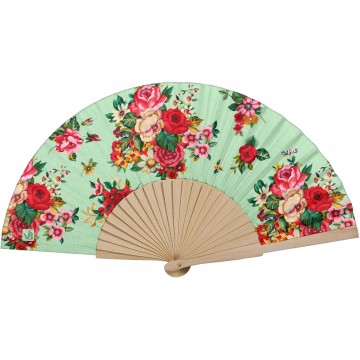
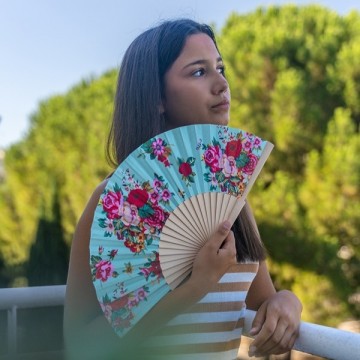
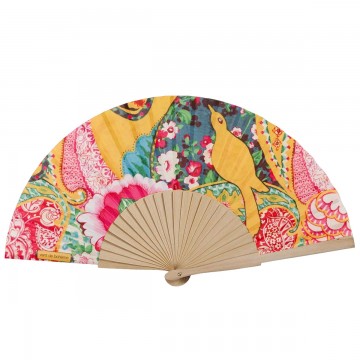
Also known as the abanico, the Spanish hand fan was invented in the 17th century. It was mainly produced in Madrid, Barcelona, Valencia, Málaga and Cádiz, and it served at once as a way of keeping cool, a fashion accessory and a dance accessory. Contrary to popular belief, the Spanish fan does not come from India, Japan or China. It is a fan unique to Spain.
A way of keeping cool and a fashion accessory
While the French word “éventail” comes from the word “vent” (wind), the abanico takes its name from the Portuguese verb “abanar”, which means to sift, shake or wave. It is indeed held in the hand and waved from side to side or up and down to fan oneself. It can also be used to chase away insects and dispel unpleasant smells. It is also a fashion accessory to match elegant outfits. In fact, it was the most widely used accessory in the 17th century for going to a party or to the theatre. It was carried by women and men alike, and it made it possible to tell the social class of the person holding it.
A way of expressing oneself
The Spanish fan also gave rise to a feminine body language and a code of love. It reflected femininity and imagination, and it was used as a means of expression, notably to show one's state of mind and for flirting or declarations of love. The author of Carmen, Prosper Mérimée, even described the art of using it as follows: “the fan opens, closes and turns in their fingers so quickly, so lightly, that a conjuror could do no better”.
There was indeed a secret coded language of the fan, a way of expressing oneself that depended on the position and orientation of the fan: open, closed, in the left hand, in the right hand, touching the cheek, the chest, the ear... Among other things, these codes conveyed love, jealousy, disdain or indifference.
A dance accessory
Finally, it's worth knowing that the abanico was widely used in Andalusia during flamenco performances. It is the accessory that gives character to the gestures and the dance. Dancers know just how to handle it and show it off. They find different ways of using it to display dexterity and grace. And yes, to this day, it is impossible to dance flamenco without a fan.
Discover our hand fan collections