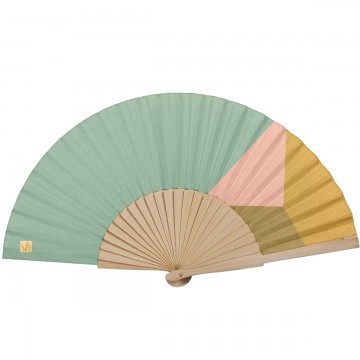
The hand fan, an accessory that is both practical and beautiful, has accompanied human history down the centuries, a testament to its versatility and timeless appeal. First used as a way to keep cool in hot climates, the fan soon became a symbol of social status and style, gracing the hands of nobles at royal courts and in elegant salons. Over time, the fan has evolved, taking on a variety of shapes and designs, and being made from an increasingly diverse range of materials.
Among these materials, wood, paper, fabric and bamboo stand out, each bringing its own distinctive characteristics to this iconic accessory. Each material offers a unique set of advantages and disadvantages, affecting both the look and the practicality of the finished fan. In this article, we dive into the world of hand fans to take an in-depth look at the characteristics of each of these materials, highlighting their strengths and weaknesses when it comes to making an accessory as refined as the fan. Whether it's the nobility of carved wood, the lightness of printed paper or the delicacy of fabric combined with bamboo, each of these materials shapes the history and aesthetics of the fan in its own unique way.
The nobility of wood
Wood – particularly cherry, prized for its fine, even texture, and raw wood, valued for its authentic, rustic look – is a traditional choice for making hand fans. Its remarkable strength and durability make it an attractive option for those looking for both quality and beauty. Wooden hand fans are often exquisitely carved works of art, lending timeless elegance to their owners.
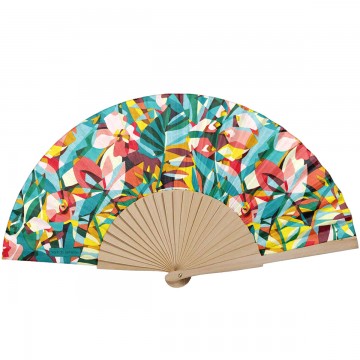
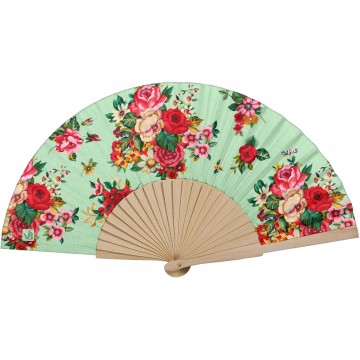
The versatility of wood is another of its major strengths in fan making. It can easily be stained or painted, offering endless design possibilities to suit every taste and every occasion. Whether for a fan adorned with delicate floral patterns or for a more modern, abstract design, wood can meet every aesthetic requirement.
The lightness and versatility of paper
Paper is a light, affordable material that has long been used to make hand fans. It allows great flexibility in terms of design, as it can easily be printed with a wide range of patterns. Paper fans are also very light, making them easy to carry in a handbag or a pocket. However, paper is fragile and can tear easily, shortening the life of the fan. What's more, it doesn't give the same feeling of solidity and quality as other materials such as wood.
The balanced combination of fabric and bamboo
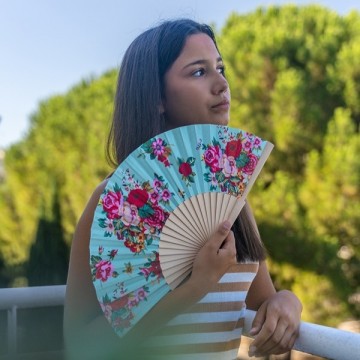
Fabric and bamboo are often used together to make hand fans, with the fabric forming the decorative part and the bamboo providing structural support. This combination offers the lightness and flexibility of fabric together with the strength of bamboo. Fabric and bamboo fans are often foldable, which makes them easy to carry and store. They also come in a wide variety of styles and patterns, thanks to the range of fabrics available. However, these fans can be less durable than wooden ones, as the fabric can tear with time and use.
In conclusion, the choice of material for a hand fan will depend on individual preferences as well as its intended use. Wood offers strength and elegance, while paper is light and affordable. Fabric and bamboo strike a balance between lightness and durability. Each of these materials has its own pros and cons, but they all contribute to the diversity and beauty of hand fans around the world. Whether it's to cool down on a hot summer's day or to add a touch of elegance to an outfit, the hand fan remains a timeless and versatile accessory.
Discover our hand fan collections