
Your cart
There are no more items in your cart
The traditional and modern hand fan, across cultures and history
The origins of the hand fan
Who invented the hand fan?
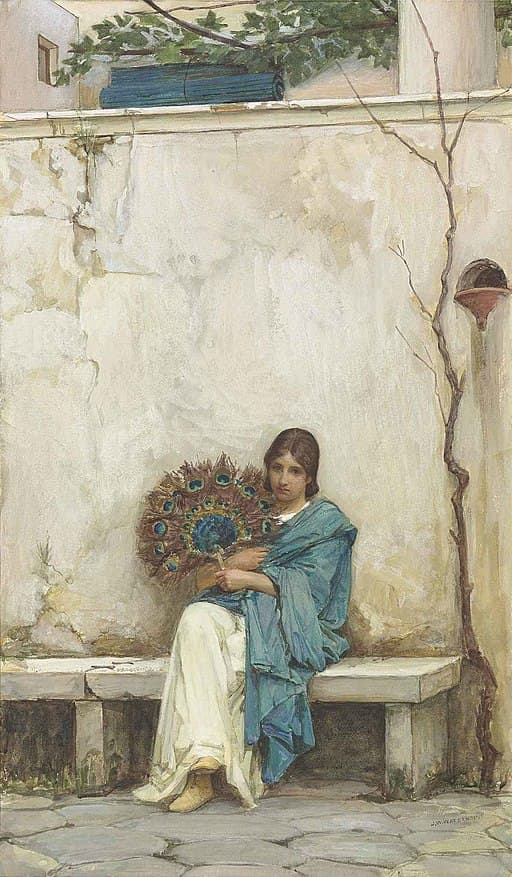
The hand fan dates back to Antiquity. There is no exact date; however, it seems that even in prehistoric times people used it to revive fires. We also know, from texts and pictorial representations, that the Egyptians, the Greeks and the Romans used the fan too. It appeared on the banks of the Nile, made from a woven palm leaf that the pharaohs' children waved to cool themselves and drive away insects. But by waving the woven leaf they also obtained perfect ventilation for separating grains of wheat from the straw.
Nevertheless, it is in China that the oldest fan has been found, dating from the 7th century BC. It is a screen fan, meaning that it is made of a single leaf that does not fold.
The folding fan is a Japanese invention of the 7th century. Its inventor is said to have been inspired by the wings of a bat, which fold and unfold.
In Europe, the folding hand fan arrived in the 16th century via Portugal. It became an instrument of refinement and luxury among the nobility and the bourgeoisie. A distinguished and stylish lady was expected to know how to handle a fan and its language.
What is the origin of the hand fan?
So it is in China that the oldest fan is found. Originally created to protect people from the sun and the rain when travelling by chariot, its use spread and the fan eventually became known all over the world.
Naturally, in hot countries fans are used to fan oneself, to create a breeze and stay cool during heatwaves. The fans of yesteryear were not quite the same as those found on the market today. Among the Egyptians, for example, the tombs of Thebes depict kings surrounded by their fan bearers, whose fans were semicircular and fixed to a handle.
They also appear in this form among the Assyrians, the Persians and the Arabs, used in religious ceremonies and also serving to protect offerings from defilement.
India is said to have borrowed the fashion for the fan from China. Indeed, the story goes in China that it originated with the daughter of a powerful mandarin, Kan-Si, who removed the mask with which she covered her face because of the heat during the Lantern Festival and, wanting to give herself some air, waved it as close as possible to her face, since the law required her to be veiled. She moved it so quickly that those present could make out nothing of her features. All the Chinese women wearing masks followed her example, and the fan was invented.
Historians in that country, however, trace the use of this object back to the reign of Wu Wang.
The hand fan: designs and cultural practices by country
History of the hand fan in Spain, from the nobility to flamenco
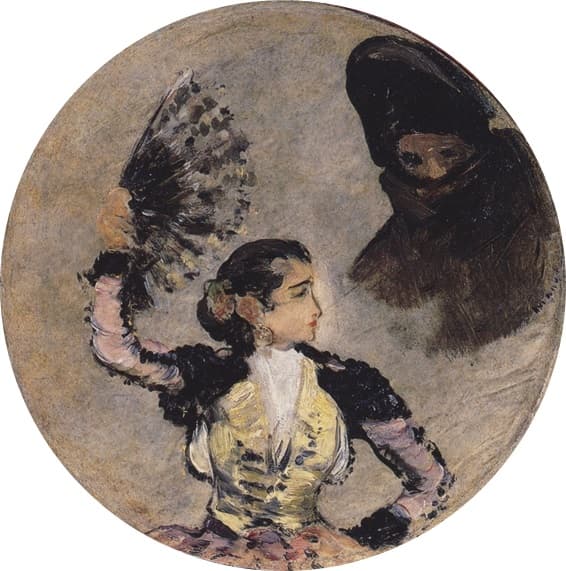
A fashion accessory, a tool of seduction and a symbol of flamenco, the fan is an iconic object in Spain. Above all, however, it proves to be an indispensable tool for coping with the summer, when the heat is intense and hard to bear.
According to Andalusian tradition, the fan is mostly used during flamenco performances or ceremonies.
It is said that Christopher Columbus brought back a feather fan in his trunks on his return from America for Queen Isabella the Catholic, a luxurious gift.
It is generally agreed that it was probably at this time that the fan came to be used in a new way, reflected in the appearance of a new word: “abano”. Indeed, while the wind (“vent”) is the origin of the French words “éventail” (fan) and “éventer” (to fan), the Spanish equivalent “abanico” comes from the Portuguese verb “abanar”, which means to stir, to shake, to wave.
It was in the 17th century that the use of the fan became widespread throughout Europe, and especially in Mediterranean Europe.
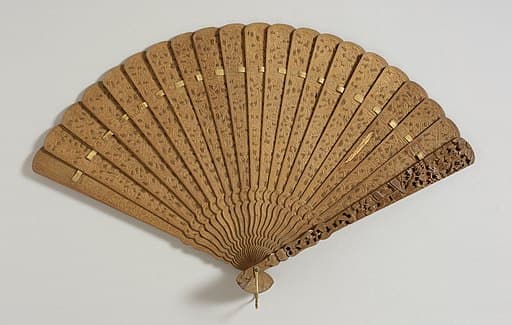
Spain and the East were then the only major producers making fans in large quantities and at very low prices. Valencia was the undisputed centre of this industry in Spain. There were different types: lace, silk… The fan makers of Valencia proved particularly skilled at making elaborate pleated fans from fine materials such as wood and mother-of-pearl.
A short history of the hand fan in France, between aristocracy and luxury
The fan was brought to Europe during the Renaissance by Portuguese navigators returning from Japan, and gradually spread.
Fashion is the main driver of the great diversity of fan types: they come in many shapes and are made from all kinds of materials.
Luxury fans were the most expensive and most luxurious fans. What made them special was that they were richly decorated with fine materials representative of each country of origin. Moreover, their sticks were fairly large and were made from materials such as tortoiseshell or ivory. If they were gifts, they were usually engraved.
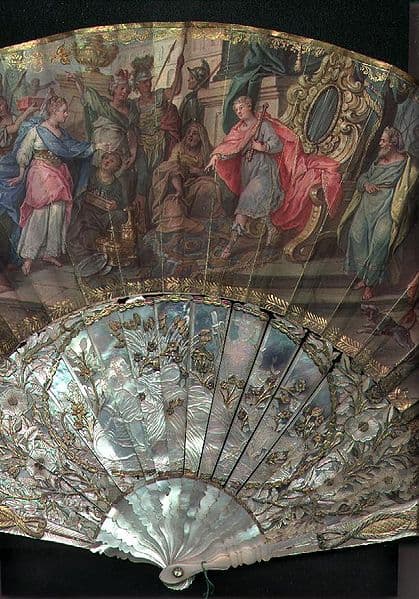
In the 18th century, French, Italian and English craftsmen turned the fan into an art object, decorating it with paintings or embroidery depicting biblical or mythological subjects or courtly scenes, and using precious materials.
Great names would leave their mark on fan production in this century: Alexandre, Duvelleroy, Kees…
Today, haute couture is bringing the fan back into the spotlight. In France, the Atelier Anne Hoguet is the last specialist who designs and restores fans according to the finest traditions of the craft.
The hand fan in Japan, an iconic object of traditional Japanese theatre and dance
The use of this object would spread to Japan via Korea.
In the 7th century AD, the Japanese invented the folding fan, the “sensu”: it was designed by a craftsman who watched the wings of a bat folding and unfolding.
From 1540, the Portuguese, returning from Japan, spread the fan across Europe from the wholesale market of Lisbon. Italy immediately embraced this new form of fan.
There are two types of fan in Japan, the uchiwa and the ogi (or sensu). The uchiwa is an oval, round or square fan with a fixed handle that does not fold. The ogi, on the other hand, is the fan we know today, a fan that folds.
The fan is certainly an everyday object for keeping cool on very hot days, but above all it is an object deeply rooted in Japanese culture. It features in particular in various traditional arts such as kabuki theatre, the traditional dance nihon buyō and the humorous storytelling art of rakugo. Indeed, the use of the fan cannot fail to bring to mind the image of the geisha, a true master of Japanese art.
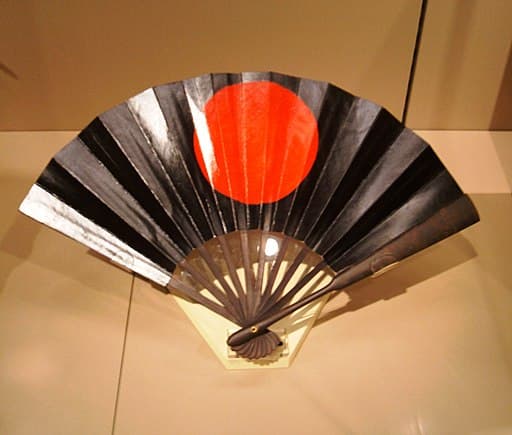
Not forgetting the gunsen, the war fan used by the shogun, the military commander.
The hand fan in China, a tradition more than two thousand years old
China has the oldest known example of a fan, dating from the 7th century BC: a screen fan.
The type of fan used at that time was not yet portable as we know it and was not used for fanning oneself. The fan, called the Shanhan, was attached to horse-drawn chariots to shield people from the sun's rays and also to shelter them from the rain.
After a few decades, the Shanhan evolved into a long-handled fan called the Zhangshan, made from feathers or fine silk fabrics. At the time, the Zhangshan was mainly used for decoration and formed part of the uniform of the emperor's guard of honour.
The first Chinese fan used in the way we know today, to keep cool, was invented during the Zhou dynasty (1046–256 BC), more than 2,000 years ago. These fans were mainly made of feathers and were called “feather fans” in Chinese. They were especially popular among the wealthy, as they were costly to make.
Later, a bamboo version made the fan more affordable and brought it within everyone's reach.
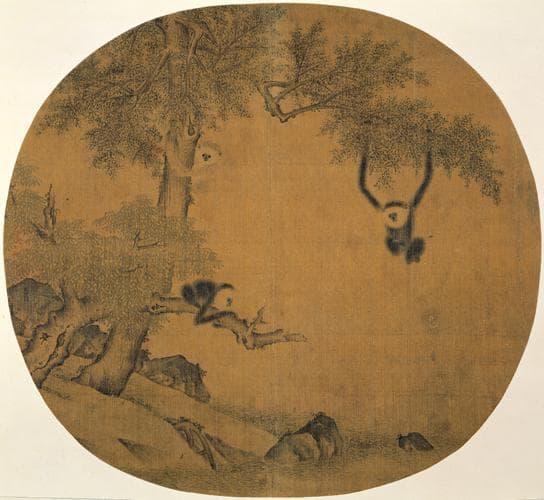
The popularity of these fans continued until the Song dynasty (960–1279). A new type of silk fan was invented, round in shape to resemble the moon, and called “round fans” or tuanshan. Thanks to their small size and ease of use, round fans quickly became very popular, especially among young Chinese women.
Chinese fans were made of feathers, palm leaves, bamboo or silk, and the richness of the handle varied according to the person who carried it.
Round fans allowed some artists to shine, as the handle was usually engraved with pretty patterns and adorned with a precious-stone pendant. The “round” of the fan was decorated with paintings evoking nature or Chinese culture.
The hand fan: practical questions
The language of the fan
Beyond its practical use, the fan also made it possible, at ceremonies, to signal discreetly through non-verbal signs whether one was interested or not, annoyed, attracted, and so on. This secret language depends on the positions and orientation of the fan: open or closed, in the right hand or the left, hiding the mouth, the cheek or the bosom… These codes of seduction could express, for example, love, indifference, jealousy or disdain. Let's look at a few of them:
- closing it quickly means “I am jealous”;
- closed in the right hand: “I am looking for a fiancé”;
- closed in the left hand: “I am not single”;
- fanning it very quickly: “I love you very much”;
- tapping it against another object: “I am growing impatient”;
- covering part of the face with it: “We are being watched”;
- or resting the leaf on the lips: “Kiss me”.
Finally, in 1827, a certain Duvelleroy founded his fan-making and leather goods company in Paris. As his business flourished, he opened a second shop in London and, as a publicity stunt, published a small booklet setting out the signs of a “language of the fan”. Amusing and original, the booklet caused something of a stir, but historians have clearly shown that this language of the fan never became part of the customs of the time. A quirky idea that proved a successful marketing tool for the house of Duvelleroy!
For this portrait of Maria Luisa of Spain, Grand Duchess of Tuscany (1765): “The painting opens on the portrait of Maria Luisa in the foreground, shown turned towards the viewer, graceful in a gilded armchair upholstered in red velvet, in a regal pose and with a fan in her hand – this particular instrument of seduction and coded language which, over the centuries, runs through the most sensual, precious and refined canvases of artists of all time.”


Etymology of the French word “éventail” and its different meanings
If we break down the French word “éventail”, we can see that it is made up of the prefix “é”, followed by the word “vent” (wind) and ending with the suffix “ail”.
The prefix “é” denotes the action of removing, taking away or moving something. For example, “égrener” means to remove the seeds, “égoutter” means to remove the drops and, finally, “éventer” means to move the wind.
According to the CNRTL, we can also see that the word “ventail” referred to the part of the visor of closed helmets through which air passed. The link with the wind is obvious.
Next comes the word “vent”, then the suffix “ail”, which comes from the Latin “aculum” and is found in derivatives designating tools or referring to words associated with vitality and productivity.
Today, the word “éventail” has several definitions.
The first is the one that interests us: a “screen that is waved to create a breeze”.
The second refers to a shape or appearance, as can be said of feet or trees, for example: “avoir les pieds en forme d'éventail” (to have fan-shaped feet).
Finally, “éventail” can refer to a set of more or less varied items within the same category, a synonym of “range”, often used in economics.
The plural of éventail in French: éventails or éventaux?
A little curiosity of the French language: many nouns ending in -ail form their plural in -aux, such as travail (work), which becomes travaux. But not our fan! In the plural, éventail simply takes an “s”:
- un éventail (one fan),
- des éventails (several fans).
How do you make a hand fan?
An essential fashion accessory for coping with intense heat, the fan can also add a touch of class to your everyday outfits. You will find them in various sizes, colours, shapes and materials, and can choose the one you like best and that goes with your outfit. An everyday object: whether you are on holiday or at work, don't forget to slip your fan into your bag – it will be the perfect companion throughout the day!
Where can you buy a hand fan?
To find the right fan for you, you will need to visit specialist shops such as Vent de bohème, for example, to find a fan made in the traditional way from wood and cotton. The printed, colourful fabrics will help you find the fan that suits you.
A fan to make yourself
If you are faced with an urgent need, there is always the famous, timeless paper fan for quick, handy creations! All you need is a simple sheet of paper folded evenly, with nice tight folds. A single-use fan that can bring relief during long waits or the discomfort of the heatwaves we are now experiencing.
And of course, beyond the paper fan, you can create one from scratch with the materials you like. The fan has always taken many forms, adapting to the customs and fashions of each country.
Handcrafted wooden hand fans
Rediscover the pleasure of the fan with Vent de bohème's original creations: hand fans in wood and printed cotton for a unique fashion accessory.
Reconnect with the history of the fan and let yourself be inspired by this boho-chic selection!